
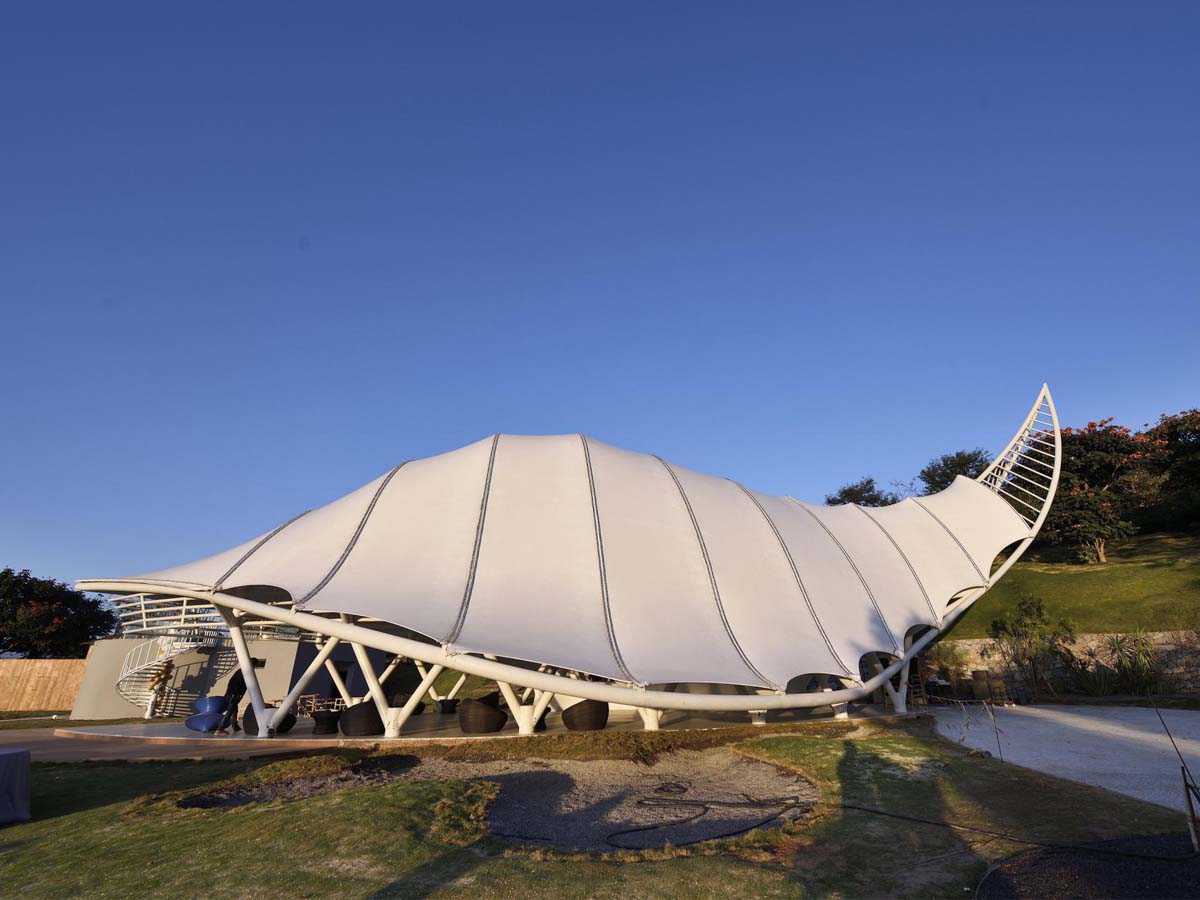
Various Facts About Fabric Tensile Structures in India
Posted on 2026-02-26 by Admin
At Archway Tensile, we view
architecture not as a pursuit of rigidity, but as an art form that captures the
fluidity of the sky. As a premier tensile structure manufacturer in India, we
have witnessed firsthand the transformation of the Indian landscape—from
sprawling IT parks in Bengaluru to luxury resorts in Goa—through the
application of tensile fabric technology. But what exactly makes these
structures so revolutionary? Here are various facts about tensile structures
that highlight their genius.
1. The Principle of Pure
Efficiency
Unlike conventional buildings
that rely on compression and mass (think heavy concrete and steel beams),
tensile structures survive purely through tension.
Fact: A tensile structure is the
architectural equivalent of a bow and arrow. The membrane (fabric) is stretched
over a supporting framework, creating a state of pre-tension that gives the
structure its rigidity.
Material Efficiency: Because the
fabric is always in tension and never in bending, engineers can use materials
that are incredibly thin and lightweight. This "form-active" design
means we use steel only where necessary, making tensile structures one of the
most resource-efficient building methods available.
2. They "Work" 24/7
(The Self Cleaning Phenomenon)
One of the most surprising facts
for new clients is that a high-quality tensile structure actually cleans
itself.
The Science: Most architectural
membranes (like PTFE-coated fiberglass or PVC-coated polyester) are treated
with coatings such as PVDF (Polyvinylidene fluoride) or Titanium Dioxide.
The Result: These coatings create
a photocatalytic surface. When UV light from the sun hits the fabric, it breaks
down organic matter (dust, bird droppings, pollution). When it rains, the water
sheets off the fabric rather than beading carrying away the dirt and leaving
the membrane spotless. At Archway Tensile, we ensure our installations maintain
this "low-impact" appearance for decades.
3. The "Light"
Revolution
To understand the impact of
tensile architecture, consider this comparison:
A traditional roof requires tons
of steel trusses and heavy decking.
A tensile roof requires a
fraction of that.
Fact: Tensile structures can
weigh as little as 1% of conventional concrete roofs. This drastic reduction in
dead load means we can span massive distances (like stadiums or airport
terminals) with fewer columns. This allows for uninterrupted, flexible interior
spaces that are highly sought after in Indian urban planning.
4. Masters of Natural Light
(Daylight Harvesting)
India is blessed with abundant
sunlight. Tensile membranes are uniquely qualified to harness this resource.
Translucency: While solid roofs
create dark, cave-like interiors requiring constant artificial light, tensile
membranes are translucent. They allow diffused natural light to flood the space
below.
UV Rejection: This isn't the
harsh, direct sunlight. The membrane filters out harmful UV rays while bathing
the area in soft, glare-free light. This "daylight harvesting"
significantly reduces electricity bills and creates a more pleasant, productive
environment for shopping, walking, or working.
5. Material Science: The
"Skin" of the Structure
The performance of a tensile
structure lies in its "skin." At Archway Tensile, we work with
advanced polymers that are marvels of modern engineering:
PTFE (Polytetrafluoroethylene):
Often woven with fiberglass, this is the "forever" fabric. It has an
expected lifespan of over 50 years and is completely inert, resistant to UV
rays, and non-combustible.
ETFE (Ethylene
Tetrafluoroethylene): This is not a fabric but a transparent polymer film. Used
in projects like the SoFi Stadium or the Jewel Changi Airport, ETFE pillows are
lightweight, provide incredible thermal insulation, and can be printed with dots
to control solar gain.
6. The Sustainability Quotient
In an era of climate
responsibility, tensile structures are inherently green.
Less Material, Less Carbon:
Because they use minimal raw materials, the carbon footprint of manufacturing
and transportation is drastically lower than traditional construction.
Recyclability: At the end of
their long life, modern tensile membranes are fully recyclable, turning into
pellets for new industrial products rather than sitting in landfills.
Cooling Effect: By providing
shade and allowing hot air to escape (through natural convection at high
points), tensile canopies reduce the Urban Heat Island effect, making outdoor
areas in cities like Delhi and Mumbai more habitable during summer.
7. The Geometry of Soap Films
Have you ever watched a soap
bubble or a film of soap stretched across a wire loop? Nature always finds the
shape with the least surface area for the given boundaries.
Fact: Tensile structures follow
the same "minimal surface" principles. This is why they often feature
stunning, curved "saddle" shapes. These aren't just aesthetic
choices; they are the most structurally sound way to distribute stress evenly
across a membrane, preventing flutter and fatigue.
8. Speed of Construction
In the fast-paced development of
Indian infrastructure, time is money.
Fact: A tensile structure can be
designed, fabricated, and installed in a fraction of the time required for a
steel shed or concrete building.
Archway Advantage: Because
components are prefabricated in our factory, site disturbance is minimal. We
can erect a large-span canopy over an existing parking lot or restaurant in
days, not months, allowing businesses to continue operations without interruption.
9. The "Earthquake"
Resistance
Since tensile structures are
lightweight and flexible, they perform exceptionally well in seismic zones.
Dynamic Response: Unlike brittle
concrete or masonry, which cracks under sudden ground movement, a tensile
membrane flexes and sways with the motion. The tensioned system absorbs and
dissipates energy rather than fighting it, making these structures incredibly
safe for regions prone to tremors.
10. An Infinite Palette of
Form
Contrary to the belief that
fabric structures are limited to tents, modern tensile engineering allows for
virtually any shape. From high-rise atrium skylights to massive stadium roofs
and intricate entrance canopies, the only limit is the imagination.
At Archway Tensile, we blend
these scientific principles with artistic vision. As a leading tensile structure manufacturer in
India, we don't just erect canopies; we engineer experiences crafting shade,
light, and space into structures that stand the test of time and the elements.
If you are looking to transform
your space with the magic of tensile architecture, Archway Tensile is your
partner in innovation.