
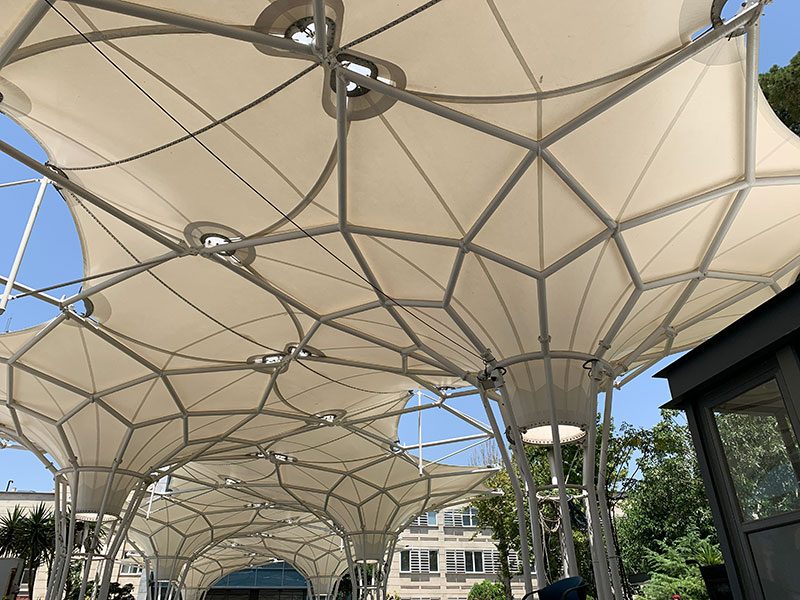
The Future of Lightweight Tensile Surface Structures
Posted on 2026-02-26 by Admin
The Future of Lightweight
Construction: Exploring Tensile Surface Structures
In the world of architecture and
design, a quiet revolution has been pulling at the seams of conventional
construction. Moving away from heavy, rigid, and material-intensive buildings,
architects and engineers are increasingly looking skyward to a solution that is
as elegant as it is efficient: tensile surface structures. At Archway Tensile,
we have dedicated ourselves to mastering this form of art and engineering,
creating iconic spaces that redefine what is possible.
But what exactly are tensile
structures, and why are they becoming the go-to solution for everything from
intimate commercial canopies to sprawling stadium roofs? Let’s stretch our
understanding of this fascinating architectural form.
What is a Tensile Surface
Structure?
Tensile surface structures, often
referred to as tension fabric structures or tensile membrane structures, are
construction systems that carry loads through tension rather than compression
or bending. Unlike a traditional brick-and-mortar building that pushes weight
down into the ground (compression), a tensile structure pulls forces against
its supports.
Imagine a fabric stretched
tightly over a frame. That simple concept, when amplified by advanced
engineering and high-tech materials, creates the foundation for these
structures. Typically, a durable membrane is tensioned over a network of steel
cables and supports (such as masts or compression rings). This network creates
an anticlastic form a fancy term for the signature saddle-shaped curves you see
in modern tensile architecture. These curves are not just for show; they are
structurally necessary to provide stability and prevent the fabric from
fluttering in the wind.
The Power of Materials: From
PVC to PTFE
The magic of a tensile structure
lies not just in its form, but in the fabric itself. The materials used are a
far cry from the canvas of a camping tent. They are engineered composites
designed to last for decades in harsh environmental conditions. As highlighted
in recent industry research, the choice of yarn material and coating is
critical to the structure's strength and longevity.
At Archway Tensile, we work with
the most reliable and quality-focused membrane manufacturers to specify the
right material for the job. The most common architectural fabrics include:
PVC Coated Polyester: This
is a workhorse of the industry. Woven polyester base cloth provides the
strength, while a coating of Poly Vinyl Chloride (PVC) protects it from UV rays
and weathering. Often, a top coat of PVDF (Polyvinylidene fluoride) is added
for self-cleaning properties, ensuring the structure remains bright and
beautiful with minimal maintenance.
PTFE Coated Fiberglass: For
permanent, large-scale projects like the Halo Roof at Perth's Optus Stadium,
PTFE (Poly Tetra Fluro Ethylene) is the material of choice. This is an
incredibly durable material. The fiberglass provides immense strength, while
the PTFE coating is extremely stable, non-stick, and has an expected lifespan
of over 30 years. It is also highly translucent, allowing for beautiful natural
light diffusion.
ETFE Foil: Representing
the cutting edge of the industry, ETFE (Ethylene Tetrafluoroethylene) is a
polymer membrane that acts as a lightweight alternative to glass. It is
transparent, recyclable, and can be used in multi-layered cushion systems that
provide excellent insulation. It was famously used for the "Bubble"
at the Allianz Arena and the Eden Project biomes.
The Top 5 Advantages of
Choosing Tensile Structures
Why choose a tensile membrane
over a conventional steel or concrete roof? The benefits are compelling and
align perfectly with the demands of modern, sustainable architecture.
1. Unmatched Aesthetic Appeal
Tensile structures are visually
stunning. They offer a fluidity and dynamism that rigid materials simply cannot
achieve. Whether it's a sweeping wave-form over an entrance or a soaring,
iconic dome, these structures create a sense of lightness and modernity. They
can transform a functional space into a piece of public art, and when lit from
within at night, they become glowing landmarks.
2. Ultimate Lightweight
Performance
This is the defining
characteristic of tensile architecture. A tensile membrane roof can weigh as
little as 1% of a conventional steel roof. This dramatic reduction in dead load
means less steel is required for the supporting structure, leading to cost savings
on materials and foundations. It also makes them ideal for retrofitting
existing buildings where the original structure cannot support heavy additional
loads.
3. Sustainable and Eco
Friendly
In an era of climate
consciousness, the construction industry is under pressure to reduce its carbon
footprint. Tensile structures are inherently climate-positive. They require
significantly fewer raw materials to manufacture and transport. Furthermore, because
they are so lightweight, they need less heavy machinery for installation. Many
membrane materials, like PVC and ETFE, can also be recycled at the end of their
long life. Their translucency also reduces the need for artificial lighting
during the day, slashing energy consumption.
4. Durability and Weather
Resistance
Don't let the word
"fabric" fool you. These structures are built to last and are
designed to withstand extreme environmental conditions. From the scorching heat
and sand of the desert to the cyclonic winds and monsoon rains of tropical
regions, modern tensile membranes are tested for the worst Mother Nature can
offer. The CEN/TS 19102:2023 standard, a recent technical specification for the
design of tensioned membrane structures, is a testament to the growing
confidence in their safety and durability across Europe.
5. Creation of Comfortable,
Usable Spaces
Beyond their structural benefits,
tensile membranes excel at creating comfortable human environments. They offer
high UV reflectivity, keeping the area underneath significantly cooler than
metal or glass roofing. The soft, diffused natural light that filters through
the fabric reduces glare and creates a pleasant atmosphere, which is proven to
have a positive effect on people's well being. This makes them perfect for
public gathering spaces, transport hubs, and leisure facilities.
A Wide Spectrum of
Applications
The versatility of tensile
structures means they can be adapted for almost any purpose. At Archway
Tensile, we see our solutions applied across a vast range of sectors:
Large Span Roofing: Covering
stadiums, sports facilities, and concert venues with minimal internal columns,
providing unobstructed views.
Commercial and Hospitality: Creating
welcoming entrance canopies, shade for outdoor dining areas, and modular
pavilions that extend business into the outdoors.
Urban Infrastructure: Providing
shelter for pedestrian walkways, bus stops, and train platforms.
Architectural Facades: Using
a tensile "wrap" to rejuvenate building exteriors, reduce solar heat
gain, and even incorporate large scale branding or graphics.
Specialized Solutions: From
vehicle protection hail nets to sound-absorbing interior ceilings, the
possibilities are continuously expanding.
The Future is Tensioned
As we look to the future, the
role of tensile structures is set to grow even further. Industry symposia are
currently exploring how these structures can become even more adaptive and
intelligent. Imagine membranes that can change their opacity based on the
sunlight, fabrics that can harvest solar energy through integrated
photovoltaics, or canopy shapes specifically designed to harvest rainwater.
At Archway Tensile, we are proud
to be at the forefront of this exciting field. We combine innovative design,
precision engineering, and world-class materials to bring our clients"
visions to life. Whether you require a stunning signature structure or a
practical, durable shade solution, we have the expertise to stretch the
boundaries of what's possible.
To discuss your next project,
contact Archway Tensile today. Let's build something remarkable together.